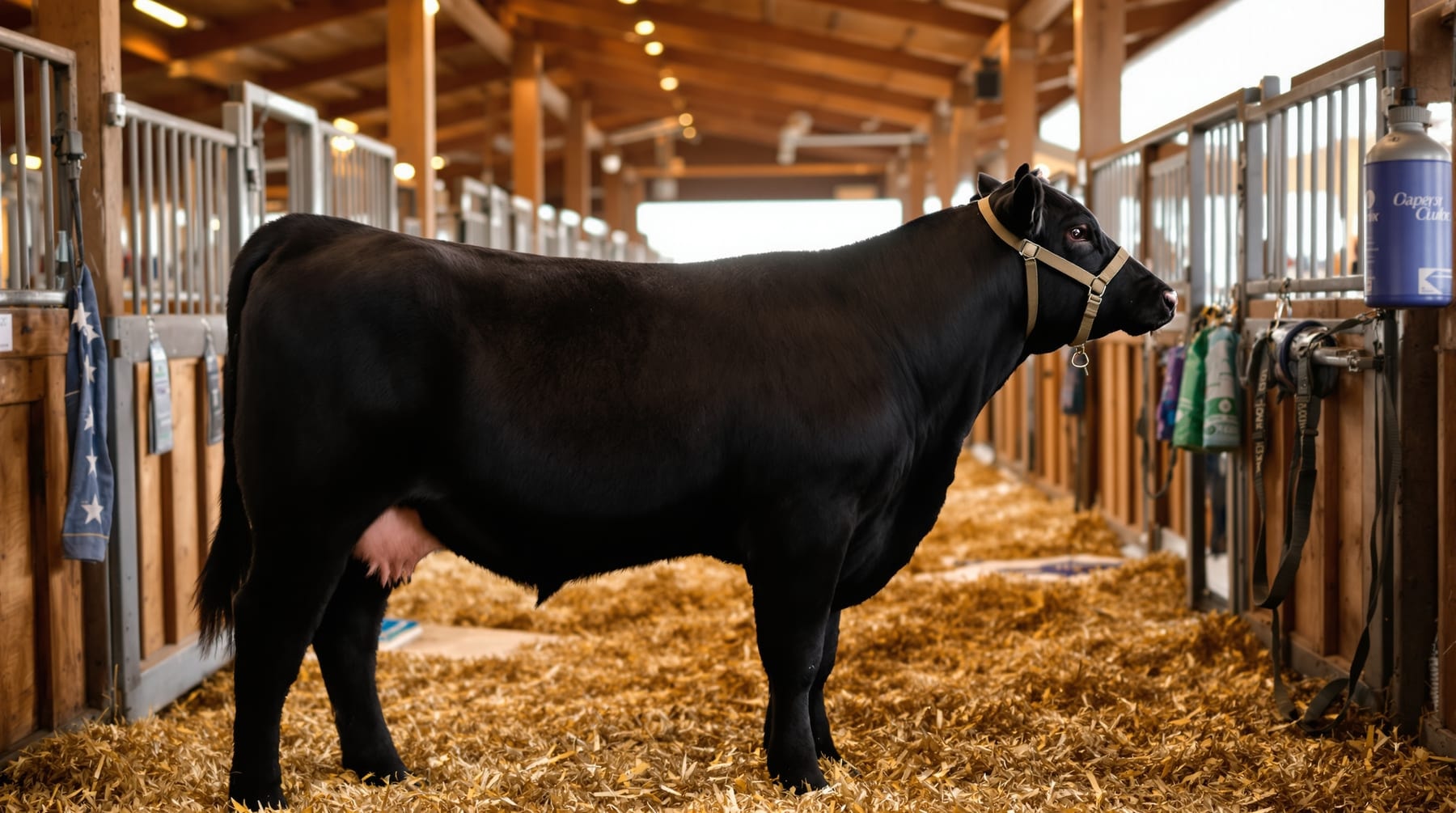
More Alberta beef producers learned the trade through 4-H than through any other route. The junior Angus programme sits alongside it, and between them they are how the purebred sector replaces itself. This page describes how that structure works. It carries no participant names, no entry deadlines and no current-year dates — for those, go to the organisations linked below.
The 4-H foundation
4-H Alberta runs one of the largest provincial 4-H programmes in Canada, and beef is its largest project area. The structure is simple and has barely changed in a century: a young person takes a project animal, keeps records on it, feeds and halter-breaks it over the winter, shows it at a club achievement day in the spring, and sells it. The programme is built on the record book as much as the ring, which is exactly why it produces people who can run a herd.
Provincial Angus associations have historically supported 4-H directly through awards programmes that recognise beef projects using Angus genetics. It is straightforward promotion — the breed reaches over a thousand young people in the province through 4-H beef clubs — but it is also the point at which a family with no purebred history first encounters registered cattle. 4-H Canada coordinates the national programme.
The junior Angus association
The Alberta Junior Angus Association is the provincial junior body for young Angus enthusiasts. Its provincial show has historically been the largest provincial breed-association junior show in Canada, and a substantial share of the current adult membership came up through it. That continuity is the whole argument for funding a junior programme: the juniors are not an outreach exercise, they are the next membership list.
A junior show is not only a cattle show. Alongside the halter classes, junior Angus events typically run judging competitions, public-speaking and sales-talk classes, marketing and photography competitions, team grooming and written examinations on breed knowledge. A competitor who never wins a halter class can still come away having learned to evaluate an animal, defend the reasons out loud and market a product — which is a more transferable set of skills than showmanship alone.
National events
The Canadian Junior Angus Association runs the national programme, and the summer calendar for a serious junior competitor has historically included:
- Showdown — the national Canadian Junior Angus show, rotating between provinces
- Summer Synergy — a large multi-species youth event held at Olds, Alberta, combining livestock competition with a substantial educational programme
- The Canadian Junior All Breeds Show — a multi-breed junior show held in Alberta
- The provincial junior Angus show — the Alberta event itself
Current dates and locations for all of these are published by the Canadian Angus Association, which coordinates the national junior programme.
Scholarships and bursaries
Provincial and national Angus bodies have long maintained scholarship and bursary programmes for members' young people continuing into post-secondary education, several of them endowed in memory of long-serving volunteers. This site does not list the individual awards, their values or their deadlines — those change annually and several are memorial awards belonging to the families and the association that administer them. Current scholarship information is published by the national association.
What a project actually involves
The romantic version is a young person leading a clean calf into a ring. The real version is five months of work in the dark. A beef project calf needs feeding twice a day through an Alberta winter, halter-breaking over weeks, regular handling so it stands and leads, clipping and washing before the show, a health and treatment record, a feed record and a full accounting of costs and returns. The record book is marked, and in most clubs it counts for as much as the placing.
What that produces is a young person who has budgeted, kept records, met deadlines, handled a large animal safely and stood in front of a judge to explain their decisions. Those are the transferable skills, and they are the reason employers well outside agriculture have historically taken 4-H on a resume seriously.
Safety and supervision
Cattle are large, fast and occasionally unpredictable, and youth livestock programmes take that seriously: club leaders supervise handling, shows have rules about age and animal size, and halter-breaking is expected to happen well before an animal is in a crowded barn. Any family considering a beef project should have that conversation with a local club leader first — through 4-H Alberta — rather than buying an animal and working it out afterwards.
Why any of it matters
The average age of a Canadian farm operator has been rising for decades, and beef is not exempt. Programmes that put a young person in charge of an animal, a budget and a record book are the cheapest succession planning the industry has. The Canadian Cattle Association and Agriculture and Agri-Food Canada both publish material on the demographics behind that concern.
For where those young people end up, see our pages on the show and sale year and on how association membership works.