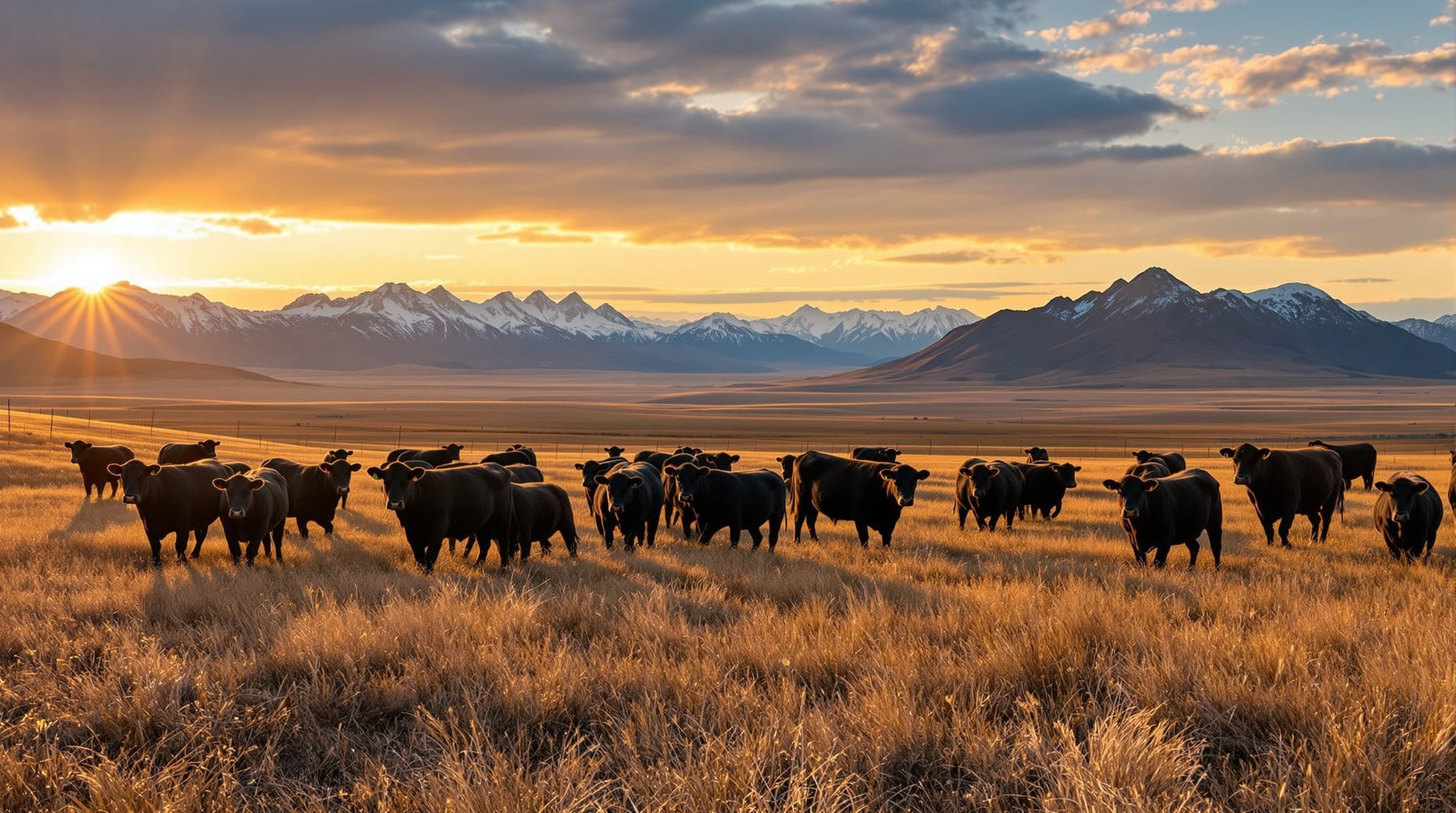
Angus cattle have shaped the Alberta beef herd for more than a century. This site is an independent reference on the breed in this province — where it came from, what it does well, how the purebred sector is organised, and how Angus genetics reach the commercial herd and, eventually, the plate.
Why Angus, and why Alberta
Alberta carries roughly forty per cent of Canada's beef cattle, and Angus is the breed that carries the largest share of that herd. The reason is not fashion. Angus cattle are naturally polled, they calve easily, the cows hold condition on rough forage, and the carcasses marble well enough that the breed name became a marketing term in its own right. Those four traits line up almost exactly with what a ranch in the foothills or the parkland actually needs.
The breed arrived in Canada in the middle of the nineteenth century and reached the Alberta range through the great imports of the 1880s. By 1917 there were enough Aberdeen-Angus breeders in the province to call a meeting at the University of Alberta and form a provincial association. That association still exists, and the national body that keeps the herd book — the Canadian Angus Association — still registers every purebred animal in the country. Our history of Angus in Alberta traces that record from the first importations to the founding meeting.
Red and Black
Canada registers Red and Black Angus in the same herd book. That is a genuine difference from the United States, where the two colours are administered separately, and it explains why a Canadian sale catalogue will often list red and black animals from the same programme side by side. The colour difference is a single recessive gene; the underlying cattle are the same breed. We cover what that means for breeders and buyers on the Red and Black Angus page.
What a provincial association actually does
A provincial breed association is not a registry. Registration, DNA verification and the herd book belong to the national association. The provincial body does the work that has to happen close to home: running a provincial show, supporting the junior association, funding 4-H awards and scholarships, publishing a newsletter, and giving commercial and seed-stock producers in the same province a room to argue in. Our pages on membership and how the work is organised explain the model.
The year on an Angus operation
The Alberta purebred calendar has a shape to it. Calving through late winter and spring; bull sale season from February into April; provincial and junior shows in July and August; Farmfair and Agribition in November; annual meetings and awards over the winter. The show and sale year page walks through that cycle, and the regional guide explains why an operation near Claresholm runs a different programme from one near Barrhead.
From the ranch to the plate
Angus is one of the few breeds whose name means something to the person buying steak. Whether that means anything on a given package depends on the grading system rather than the label, and Canada's grading standards are administered by the Canadian Beef Grading Agency. Our page on Angus beef sets out how marbling, grade and breed actually relate, without the marketing.
Youth and the next herd
More Alberta beef producers came up through 4-H than through any agricultural college. The junior Angus programme and the provincial 4-H structure are the pipeline the purebred sector depends on, and they are covered on the junior and 4-H page. 4-H Alberta runs the provincial programme.
Seed-stock and commercial
The purebred sector is small and the commercial sector is large, and the whole structure exists to move genetics from the first into the second. A registered breeder keeps pedigrees, records performance and sells bulls; a commercial producer buys those bulls and sells calves. Everything else — the shows, the catalogues, the evaluations, the association itself — is machinery for making that transfer trustworthy, so that a bull bought in March is genuinely what the catalogue said he was.
It is worth being blunt about why that machinery is needed. Genetics are invisible. A buyer cannot see calving ease or marbling potential standing in a sale ring, so the entire trade depends on records that a third party verifies. That is what a herd book is for, and it is why registration has been a national function in Canada since 1905.
A century of continuity
Look at the town names in the 1917 founding list — Lacombe, Innisfail, Olds, Huxley, Duhamel, Vegreville, Red Deer — and then look at where Alberta's purebred Angus operations sit today. The overlap is close to complete. Very few agricultural sectors can show that kind of geographic continuity over a century, and it says something durable about the fit between this breed and this landscape.
Using this site
Everything here is reference material: background, structure and context. It carries no membership list, no breeder directory, no contact details for third parties and no current-season dates. For any of that — and for anything official — go to the Canadian Angus Association's page for the Alberta Angus Association. Our organisations page lists the other bodies worth knowing, and about this site explains what it is and is not.