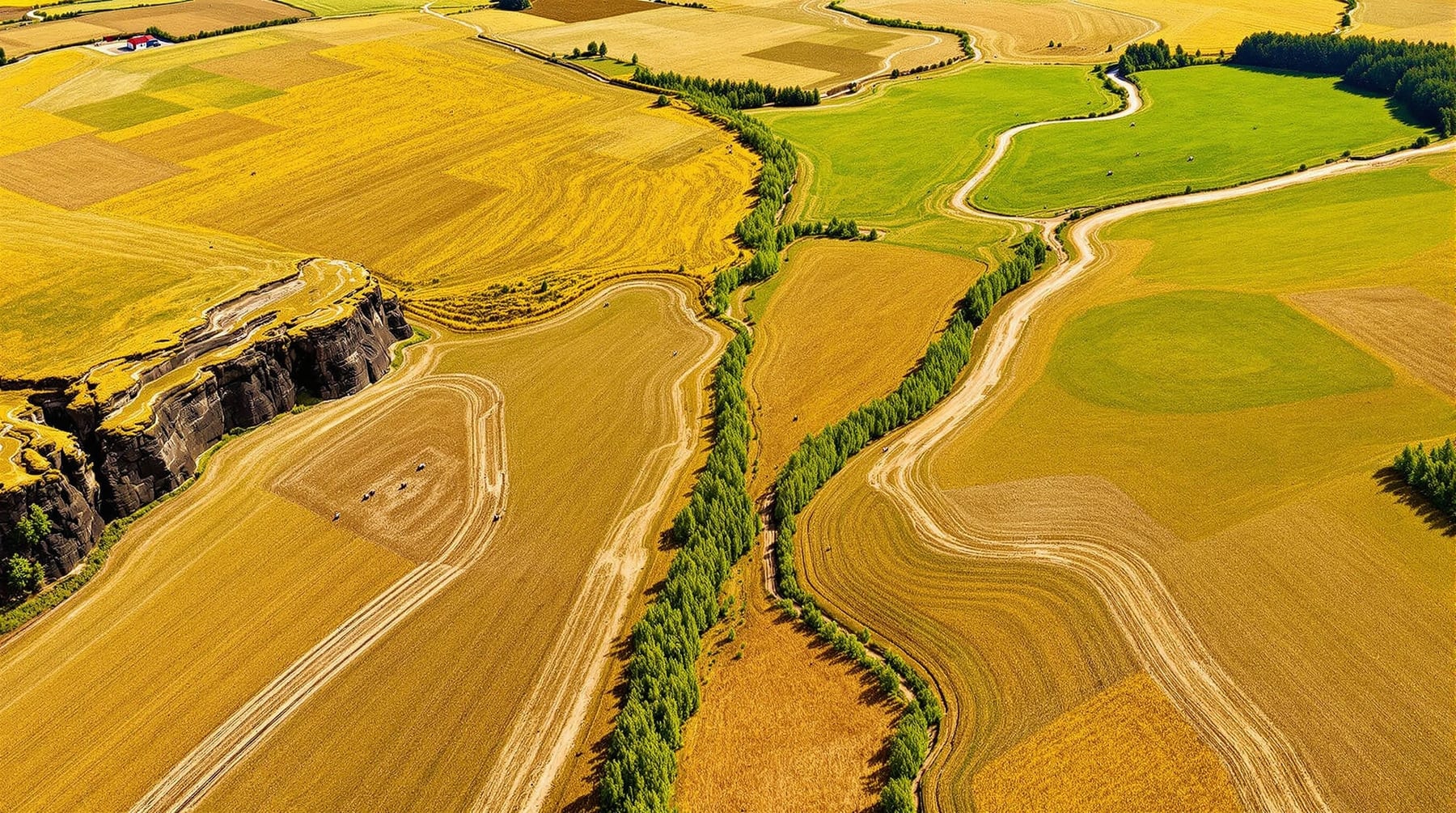
Alberta is not one cattle country. It is four or five, and the differences between them are large enough that the same cow will thrive in one and struggle in another. This page maps the province the way a producer reads it. It shows no breeders and lists no operations — it is a guide to the land, not a directory.
The dry mixedgrass and short-grass prairie — southeast
South and east of Calgary, running to the Saskatchewan border and down to Medicine Hat and the Cypress Hills, the province is dry: low rainfall, native grassland, large pastures and low stocking rates. This is extensive ranching country where a cow has to travel and where drought is a recurring rather than exceptional event.
What it asks of cattle: moderate frame, hard feet, the ability to walk, and a cow that can wean a decent calf without supplementary feed. It is unforgiving of large modern cows selected for milk they cannot support on native range.
The foothills — southwest and west
West of Highway 2 the land rises into the foothills, from the Porcupine Hills and the Waldron country up through Cochrane, Sundre and Rocky Mountain House. Rainfall is better, forage is stronger, and the grazing is some of the best in Canada — but the winters carry more snow, chinooks make conditions swing violently, and the terrain is steep.
This is historically significant Angus country: it is where the earliest large Angus imports landed, and the town of Cochrane is named after the man who brought them (see the history).
The central parkland — the black-soil belt
The aspen parkland running through Red Deer, Lacombe, Innisfail, Olds, Camrose and Vermilion is mixed farming country: black soil, good moisture, grain and forage together, smaller quarters and higher cattle density. Read the 1917 founding officer list of the provincial association and almost every town on it is in this belt.
Parkland operations tend to be more intensive: seeded pasture, silage, backgrounding on farm-grown feed, and a higher proportion of purebred programmes than the dry southeast, simply because there are more operations per township and a bigger local market for bulls.
The northwest and the Peace
North and west toward Barrhead, Whitecourt, Sangudo and on into the Peace River country, the growing season is shorter and the winters are longer, but forage production is strong and land has historically been cheaper. Cattle here need to winter well and calve in cold. The Peace is its own agricultural world — a northern grain and forage region a long way from the auction marts of the central corridor.
Why the geography drives the genetics
A bull bought for a southeastern short-grass operation and a bull bought for a parkland backgrounding operation are being selected for different jobs. The first wants moderate mature size, fleshing ability and durability; the second can carry more growth and more milk because the feed is there to support it. This is why "what is the best Angus bull" has no answer without a location attached, and it is the practical reason a provincial association — rather than a purely national one — is worth having. Our breed characteristics page covers the traits involved.
Water, winter and distance
Three constraints cut across all four regions and shape every operation in the province.
Water. Dugouts, wells, pipelines and creek access determine where cattle can graze as absolutely as fences do. In the dry southeast, water development is often the limiting investment on a ranch, and a dry year is a water problem before it is a grass problem.
Winter feeding. Alberta cattle need feed for four to six months depending on latitude and system. Swath grazing, bale grazing and stockpiled forage have spread widely because they cut the cost of that period, and a cow that can winter on lower-quality forage without losing condition is worth real money.
Distance. Auction marts, feedlots, processing capacity and veterinary services are unevenly distributed. An operation in the Peace hauls further to every one of them than an operation near Lacombe does, and freight is a genuine line item in the northern business case.
Reference material on Alberta land and forage
The Government of Alberta's agriculture pages publish material on the province's soil and forage zones, range management and drought response. Statistics Canada's census of agriculture is the authoritative source for cattle numbers by region, and the Beef Cattle Research Council publishes practical Canadian grazing and forage material.
For the seasonal cycle these regions share, see the show and sale year.