"Angus beef" is one of the few breed names that made it onto a restaurant menu. That success has produced a lot of confusion, because the word on the package and the measurement of the meat are two different things. This page separates them.
Angus is a breed. The grade is a measurement.
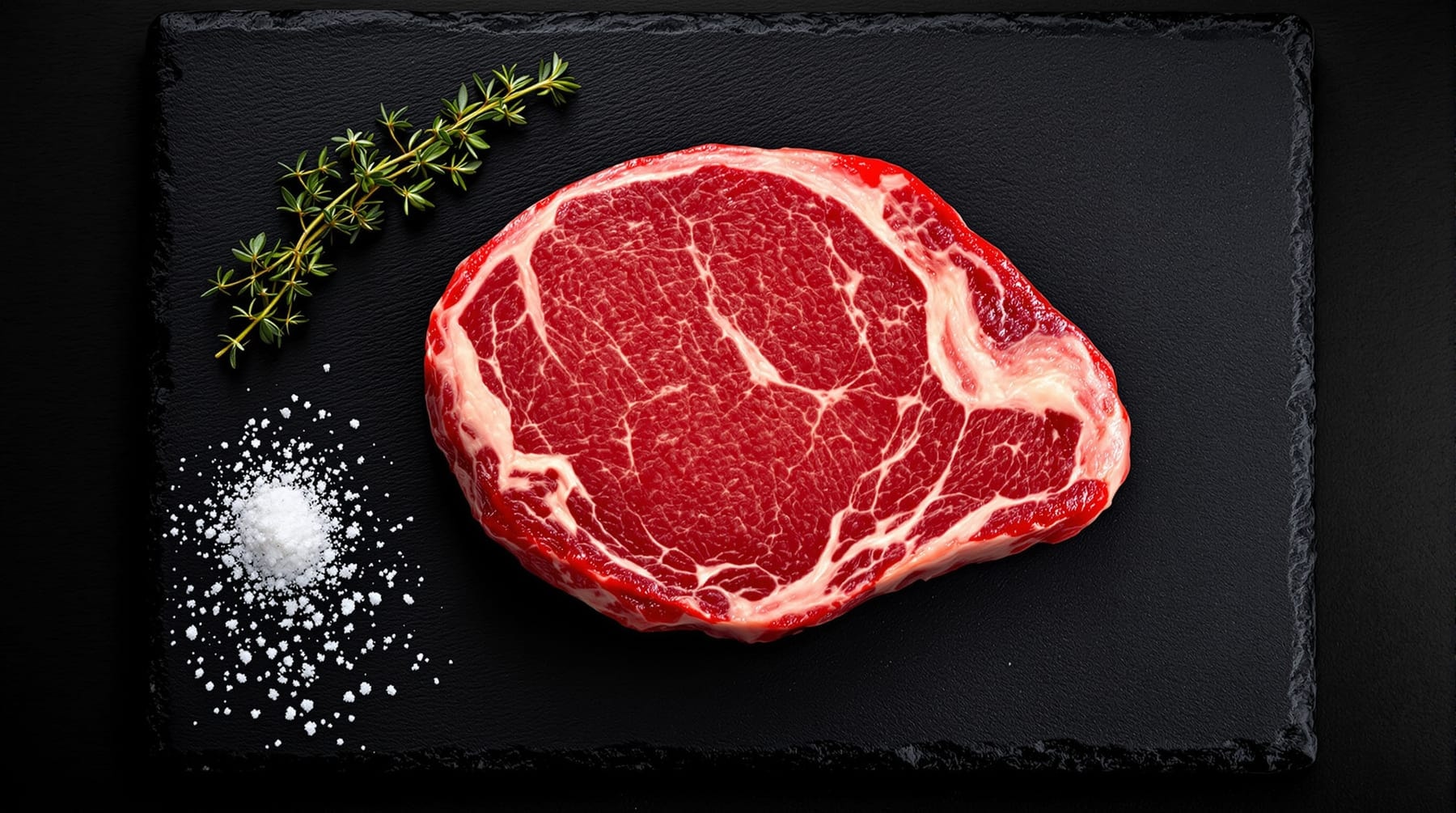
In Canada, beef carcasses are graded on maturity, muscling, fat colour and cover, and — for the quality grades that consumers see — on marbling: the flecks of intramuscular fat visible in the ribeye at the grading site. Canada Prime, AAA, AA and A are marbling steps within youthful, well-muscled carcasses. Grading standards are administered by the Canadian Beef Grading Agency.
Breed is not part of that assessment. An Angus carcass with modest marbling grades exactly where its marbling puts it, and a well-marbled carcass of another breed grades the same as an equivalent Angus one. What is true is that Angus cattle deposit intramuscular fat readily and, on average, grade higher — which is why the breed name became a marketing shorthand for a quality outcome that is actually measured separately.
What branded Angus programmes require
Branded programmes layer their own specifications on top of the grade. Typically these include a minimum marbling level, carcass weight and ribeye ranges, fat-cover limits, and — the contentious one — a hide-colour screen, usually predominantly black. Hide colour is a cheap proxy for Angus influence in a system where nobody can check a pedigree at the plant. It is a specification, not a quality measure, and as our Red and Black Angus page explains, it disadvantages red-hided cattle that are genetically just as Angus.
What marbling actually is
Marbling is fat deposited within the muscle rather than around it. It matters to eating quality because it melts during cooking, carries flavour compounds and keeps the meat from drying as the muscle fibres contract. It is a heritable trait with a published genetic evaluation, it is influenced by days on feed and ration, and it is the trait most directly connected to what a person notices about a steak.
Two honest caveats. Marbling is not the only thing that determines a good eating experience — tenderness, ageing and, above all, cooking method do enormous work. And marbling scores at the grading site are read on one muscle at one point; they describe the carcass well and any individual steak only approximately.
From the ranch to the plate
- Genetics. A commercial producer buys an Angus bull with carcass EPDs; his calves inherit the marbling potential.
- Cow-calf. Calves are raised on grass with their dams and weaned in the autumn.
- Backgrounding. Weaned calves grow on forage and modest grain over the winter.
- Finishing. Cattle go to a feedlot — Alberta's feeding sector is the largest in Canada — for the finishing period during which most marbling is deposited.
- Processing and grading. The carcass is graded, and the grade plus any programme specification determines where it is sold and at what premium.
The value of a good bull decision made in March shows up at step five, roughly two years later, in someone else's grid.
Grass-finished and grain-finished
Most Alberta beef is grain-finished, and most of the marbling in a Canada AAA carcass was deposited during that finishing period. Grass-finished beef is a genuine and growing market, but it is a different product: leaner, with a more pronounced flavour, generally taking longer to reach finish and grading differently as a result. Neither is a better animal; they are different systems with different economics and different eating characteristics.
The mistake worth avoiding is comparing them on grade alone. A grading system built around marbling will systematically rate a grass-finished carcass lower, which tells you about fat deposition and nothing at all about whether a customer will enjoy the steak.
Ageing and cooking do half the work
Two carcasses of identical grade can eat entirely differently depending on how long the meat was aged and how it was cooked. Ageing lets natural enzymes break down connective tissue, and a fortnight makes a real difference to tenderness. Cooking method matters even more: the tender, well-marbled cuts reward fast dry heat, and the hard-working cuts from the shoulder and the round reward long, slow, moist cooking, whatever the animal's genetics were. Canada Beef publishes cut-by-cut guidance on exactly this.
Buying Angus beef
If you are buying at retail, the grade tells you more than the breed claim. If you are buying direct from a producer — increasingly common in Alberta, where farm-gate and freezer-beef sales have grown steadily — ask what the animal was fed, how long it was finished, how long the meat was aged and where it was processed. Those four answers will predict your experience better than any label. Canada Beef publishes consumer material on cuts, grades and cooking.
Beef is one protein food among many. Our page on protein, muscle and age sets out what Canada's food guide and nutrition research say about eating as people get older, including the guide's advice to choose plant-based protein foods every day.
Where the standards are set
Grading standards and their administration: Canadian Beef Grading Agency. Food safety, inspection and labelling rules: Agriculture and Agri-Food Canada. Production research and carcass data: Beef Cattle Research Council. The genetics behind the carcass are covered on our breed characteristics page.